The concept of a 4-day work week started a ton of conversations in early 2020 as lots of companies searched for ways to improve happiness and flexibility with their teams.
Given the stress, company shutdowns, and general craziness of the pandemic, a 4-day work week Playbook was touted as a helpful way to address some of the issues we were all facing at the beginning of the pandemic.
Buffer, using internal surveys and feedback from their team decided to start a one-month trial of a 4-day workweek. After that trial, they saw that not only had happiness and stress improved, but productivity hadn’t dipped. They opted for a 6-month trial to validate if this was a sustainable practice, and i =n the end, it was.
Now, they are continuing 4-day work weeks for the foreseeable future. Here’s a look at some of what they’ve learned from surveying their team about the 4-day work week over the course of our two trials.
"The 4-day work week resulted in sustained productivity levels and a better sense of work-life balance". Due to the success of the trial, the team at Buffer has decided to push forward with a 4-day work week into 2021 and beyond.
Here’s how we evaluated the six-month pilot program and why they decided to continue operating on a four-day work week.
Starting in May of 2020, they measured the following:
Here is some of that data represented below:
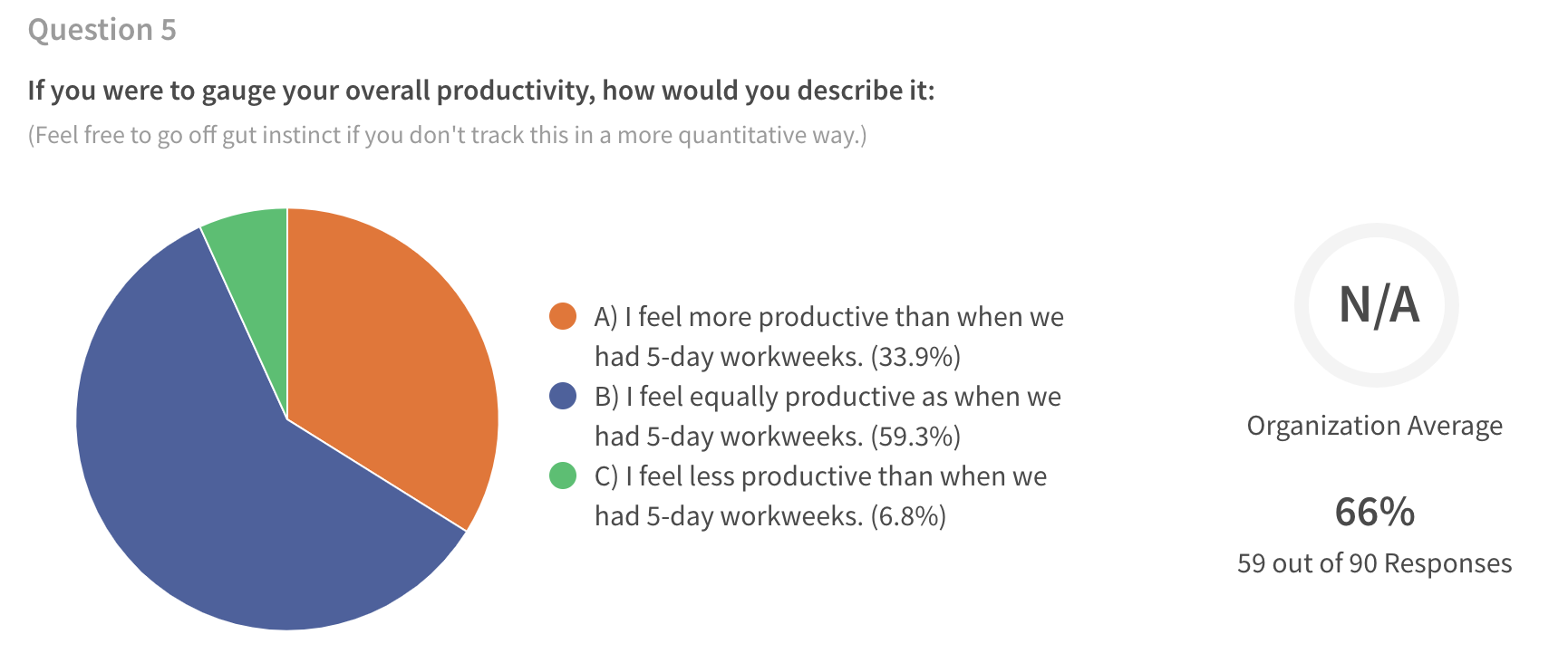
While individual team members reported feeling more productive, they also gathered feedback from front-line managers to see if the data matched. And it did!
For their Engineering teams, the number of total coding days went down. However, they saw significant increases in output. Their Engineering Managers shared: "Weekly coding days went from 3.4 to 2.7 for product teams, and from 3.2 to 2.9 for Mobile and Infrastructure, while the productive impact increased significantly for product teams and doubled for Infrastructure and Mobile!"
Many of the managers they spoke with echoed this same feeling.
The exception to these results in productivity was the customer support teams which had a harder time maintaining productivity levels, as we discussed in a previous article here.
"Anecdotally, their internal advocates still cited feeling they were about 85 to 90 percent as productive as they had been during five-day weeks outside of the customer inbox, i.e., on other projects. However, customers did wait a bit longer to receive an initial reply to their emails."
As mentioned earlier, they were asking teammates and managers to gauge productivity and well-being and not measuring it against company growth. This is something they plan to change moving forward.
Teammate autonomy and flexibility in May of 2020 was at 4.3 out of 5, with 5 being “total autonomy.” This increased to 4.7 by the end of our six-month pilot:
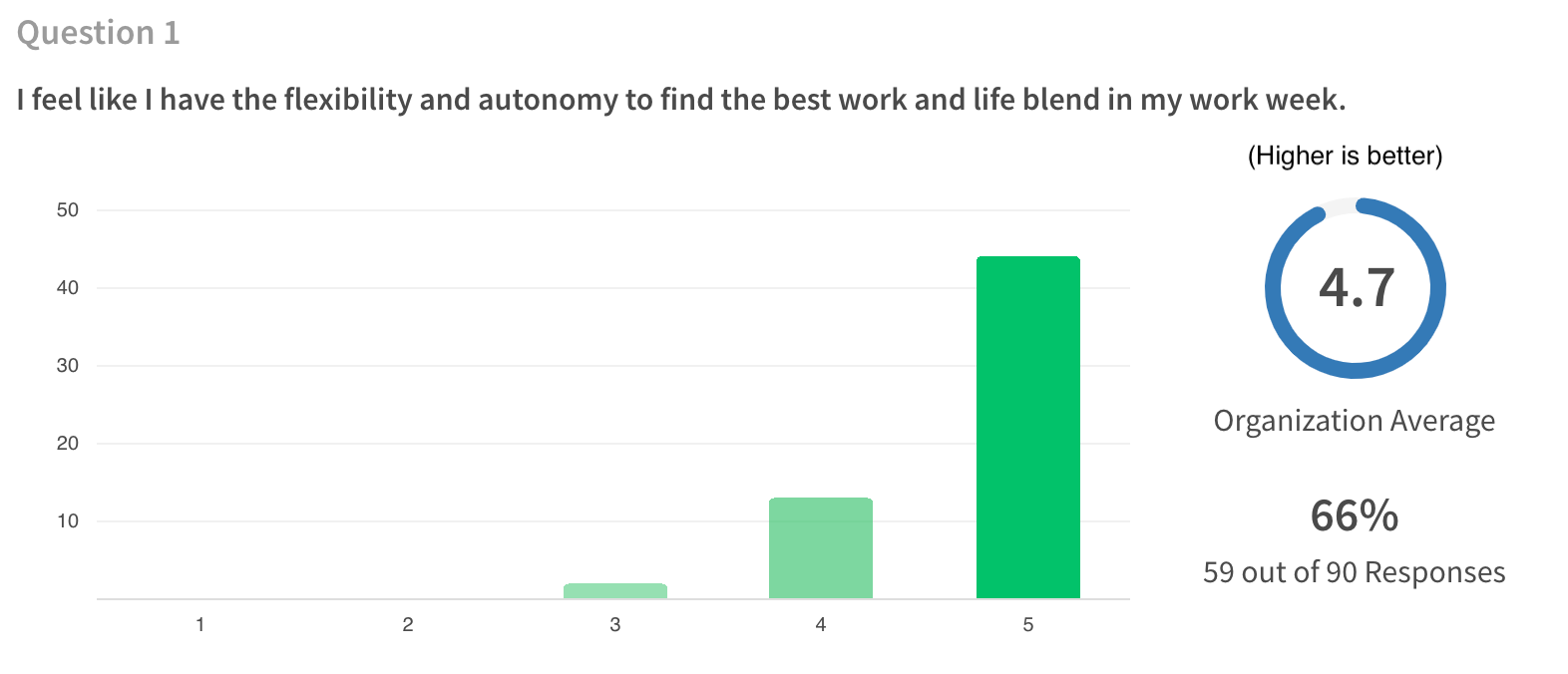
Based on their feedback, a key aspect of driving autonomy was communicating that team members had complete control over their schedules and time.
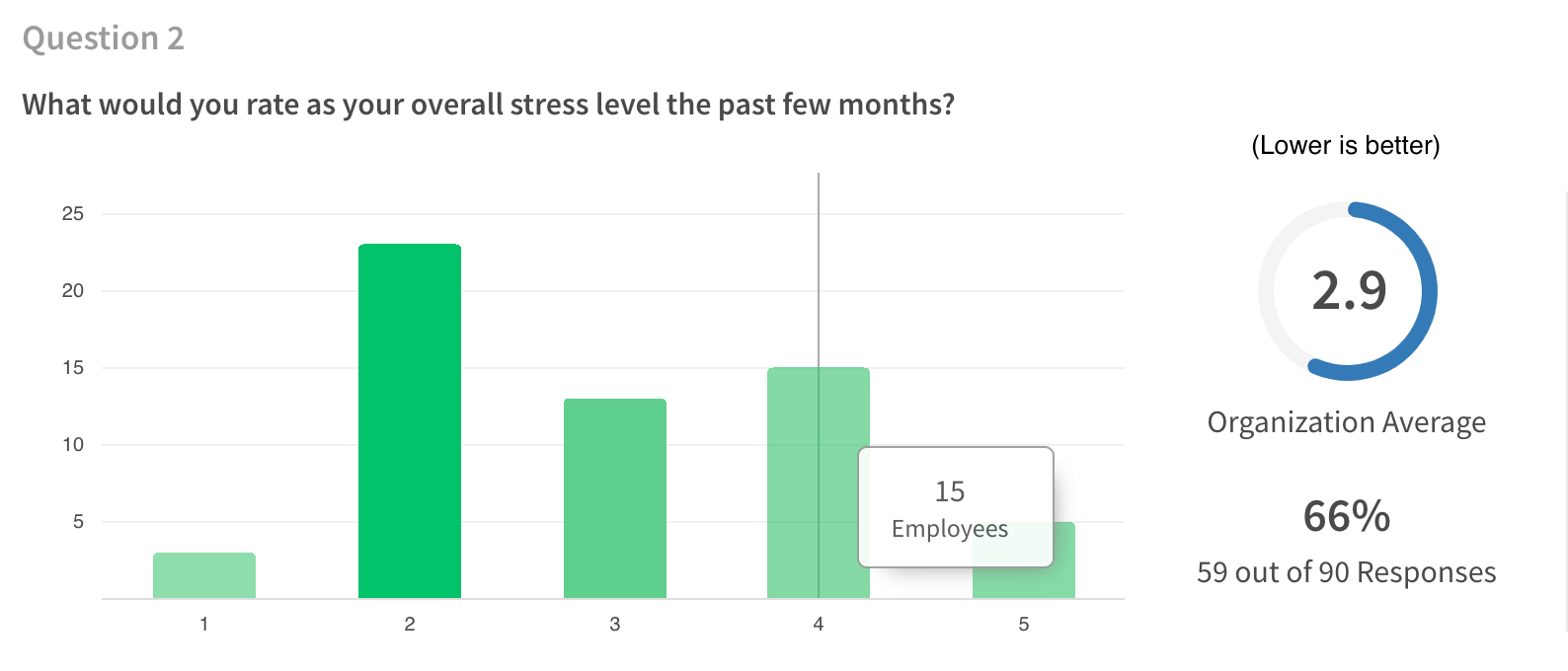
Buffer's stress levels in May 2020 (when they first launched the experiment) was 3.3 out of 5, with 5 being high stress. Reported stress dipped down to 2.7 at their June survey, and then only slightly up to 2.9 at their October survey.
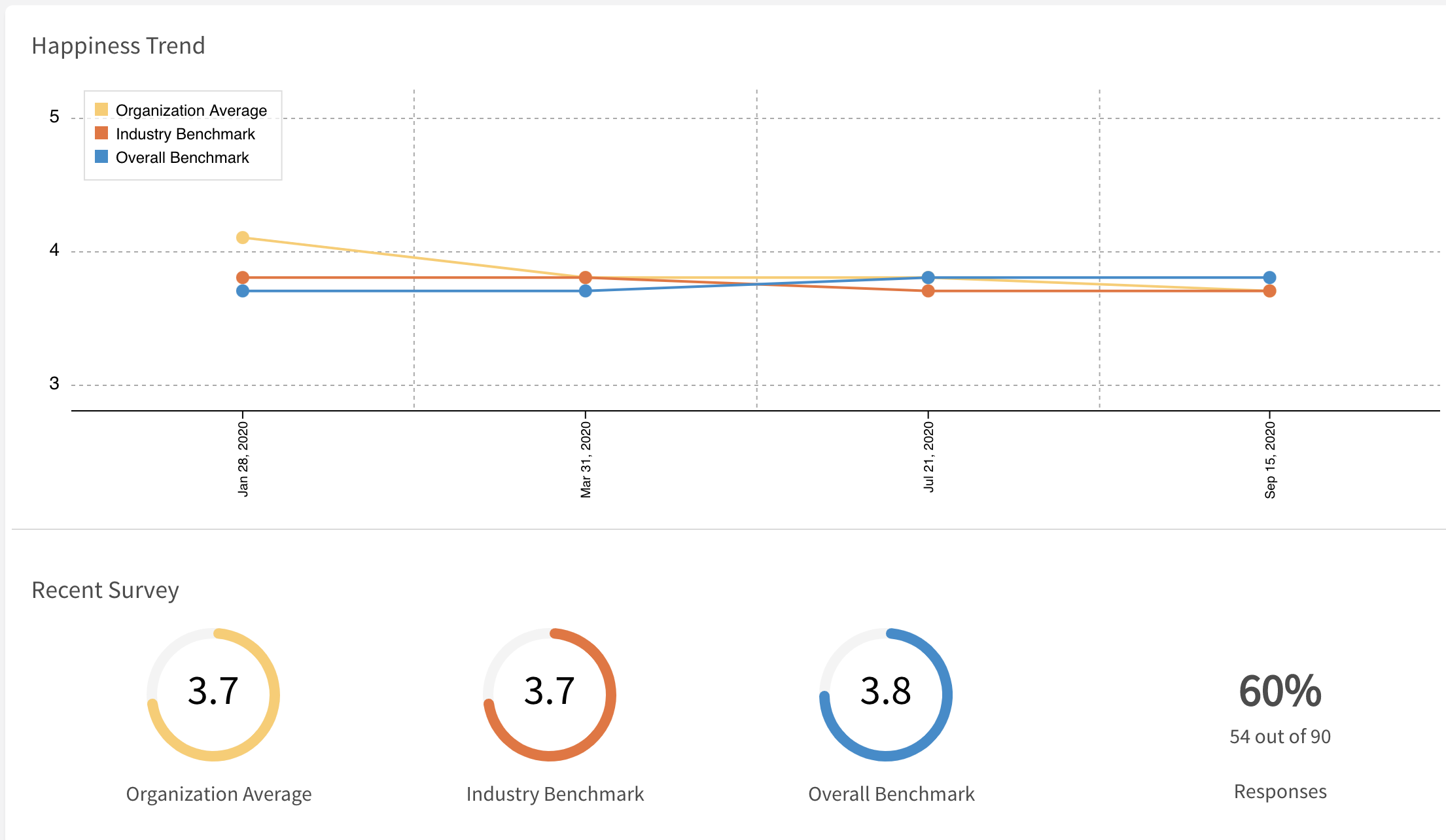
Their overall happiness trend for the entire company stayed consistent, and given the volatility of the events of 2020, they felt this was a good trend.